Why We Avoid Overstimulation
When too much is visible at once, attention is spent deciding what to look at. A calm environment makes it easier to engage deeply.
Date
January 13, 2026
Read time
1 min read

Many learning environments try to offer as much as possible. More materials, more colors, more choice. In practice, this often makes things harder for children.
When too much is visible at once, attention is spent deciding what to look at and what to ignore. By the time a child chooses something, focus is already reduced. What follows is often brief engagement, constant switching, or stepping away altogether.
This is not a lack of interest. It is a response to too much input at the same time.
Learning depends on staying with something. Noticing differences, comparing, returning to the same material again. These processes take time and mental space. They do not benefit from constant stimulation.
That is why we limit what is available at any given moment. Not to restrict children, but to support focus. A calm environment makes it easier to engage deeply. Fewer materials make it clearer where to start.
Continue
reading.
 JUL 111 min read
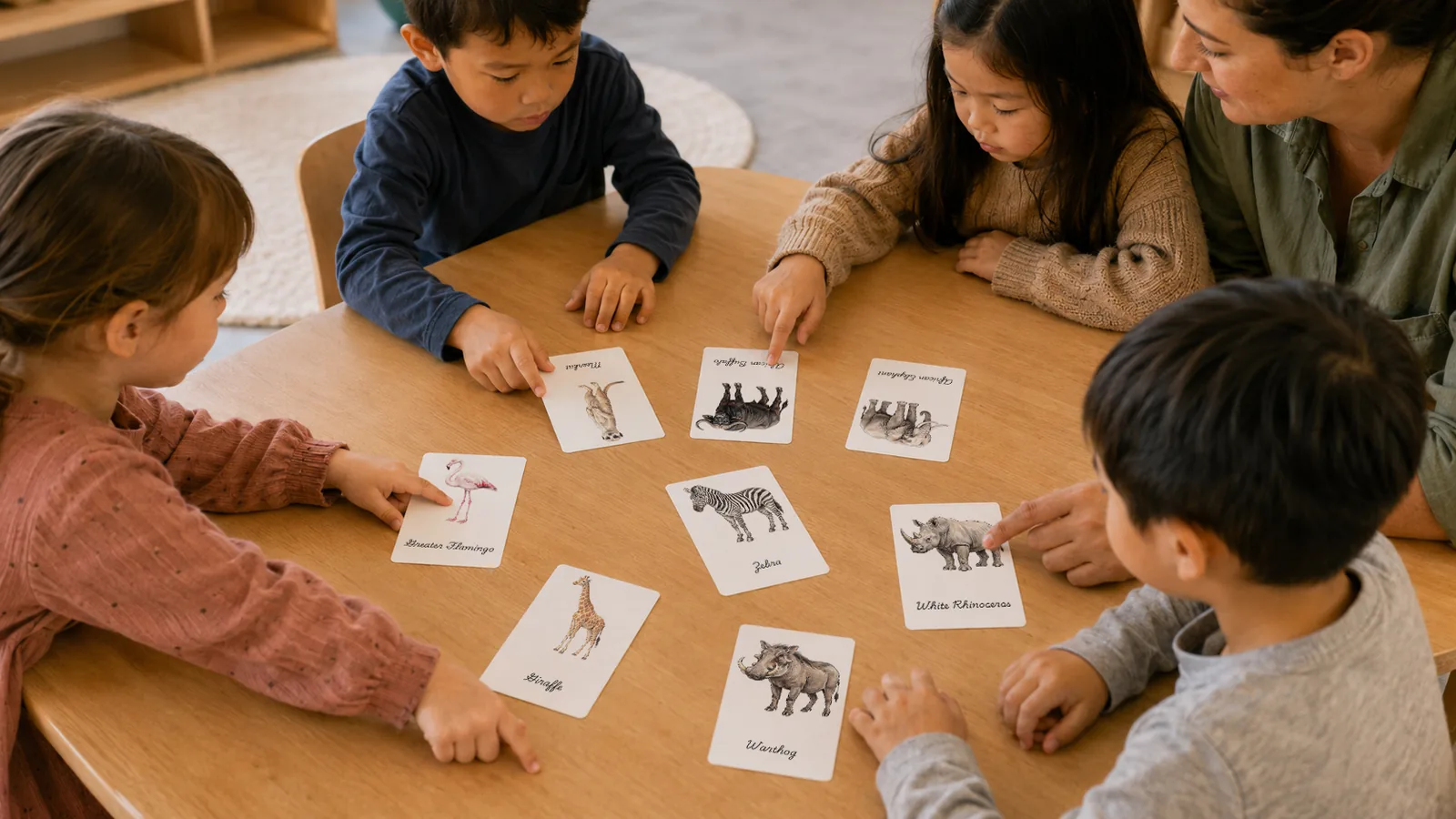
Flashcards for Quick Recall and Confident Naming
Flashcards are built for one job: helping a child recall a name quickly and confidently. Here is where they fit, where they don't, and how to use them well.
Read Article →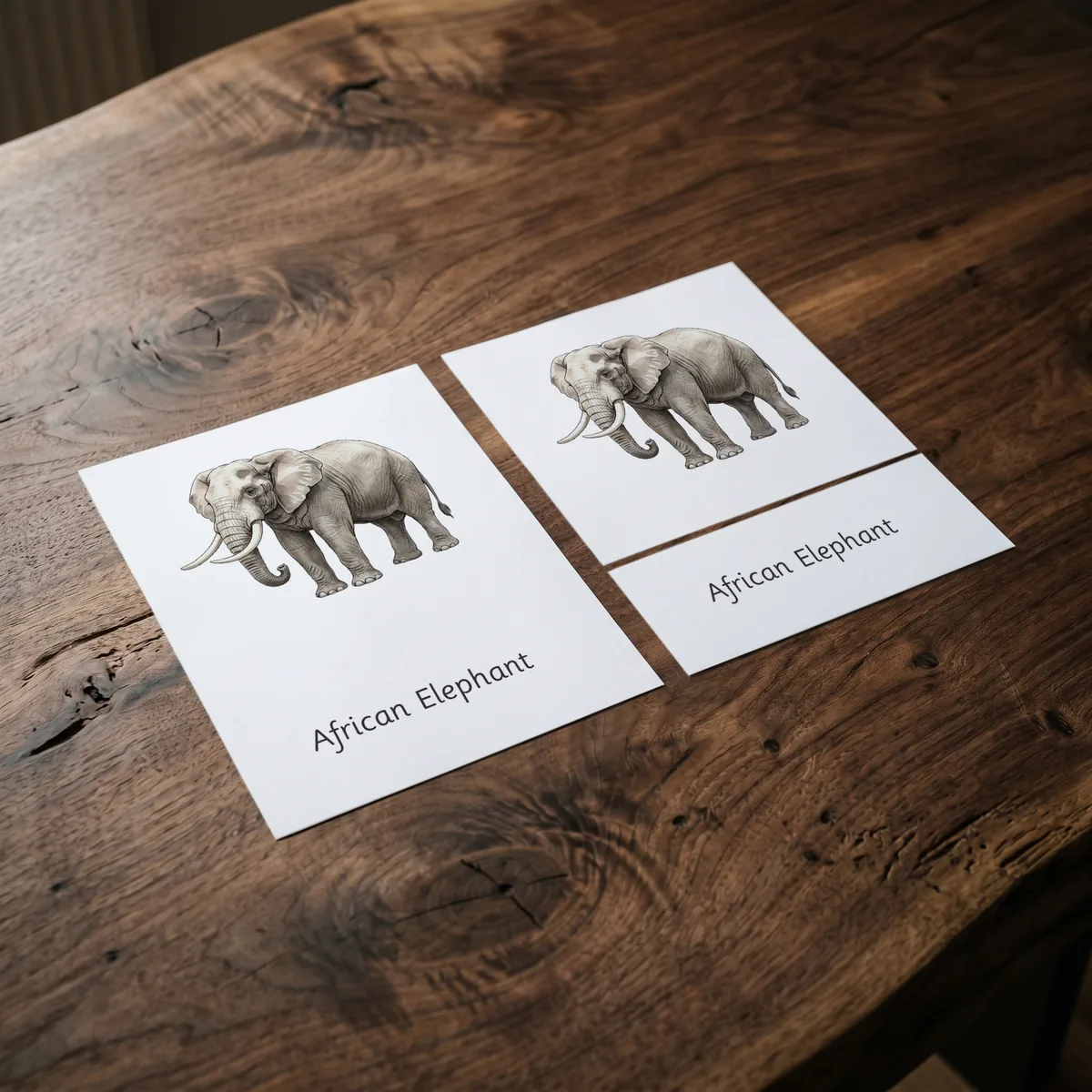 JUN 251 min read
Three Part Cards for Calm, Independent Learning
Three part cards are simple learning cards with three parts — a picture card, a word card and a control card — that help children connect real objects, spoken language and written words.
Read Article → JAN 131 min read
What Alo & Luma Means to Us
Alo comes from Aloha — a conscious hello. Luma comes from the Latin lumen, meaning light. Together they describe how we understand learning.
Read Article →