What Alo & Luma Means to Us
Alo comes from Aloha — a conscious hello. Luma comes from the Latin lumen, meaning light. Together they describe how we understand learning.
Date
January 13, 2026
Read time
1 min read

Alo is derived from Aloha. At its core, Aloha is a greeting. It means meeting someone, being present, paying attention. No concept, no philosophy. Simply a conscious “hello.”
For us, this describes well how learning begins. Children do not learn best when they are instructed or evaluated, but when they have time to engage on their own. When adults are available, but not constantly intervening. Learning needs presence, not control.
Luma comes from the Latin lumen and means light. Light creates visibility and orientation. It helps distinguish differences and recognize connections. Applied to learning, this means that children need clarity. Clear structures, manageable materials, and an environment that does not overwhelm. Too many stimuli tie up attention before learning can even begin.
Alo & Luma stands for these two things together: a learning attitude without pressure, and an environment that provides orientation. Our materials and learning spaces are designed so that children can work with them independently. They should be usable without explanation and without expectation. Learning emerges through doing, repeating, and comparing — not through instruction.
For us, holistic learning means that thinking, perception, movement, and everyday life belong together. Materials are one part of this, but not everything. Environment, rhythm, and repetition are just as important. This is how we understand learning. And this is how we work at Alo & Luma.
Continue
reading.
 JUL 111 min read
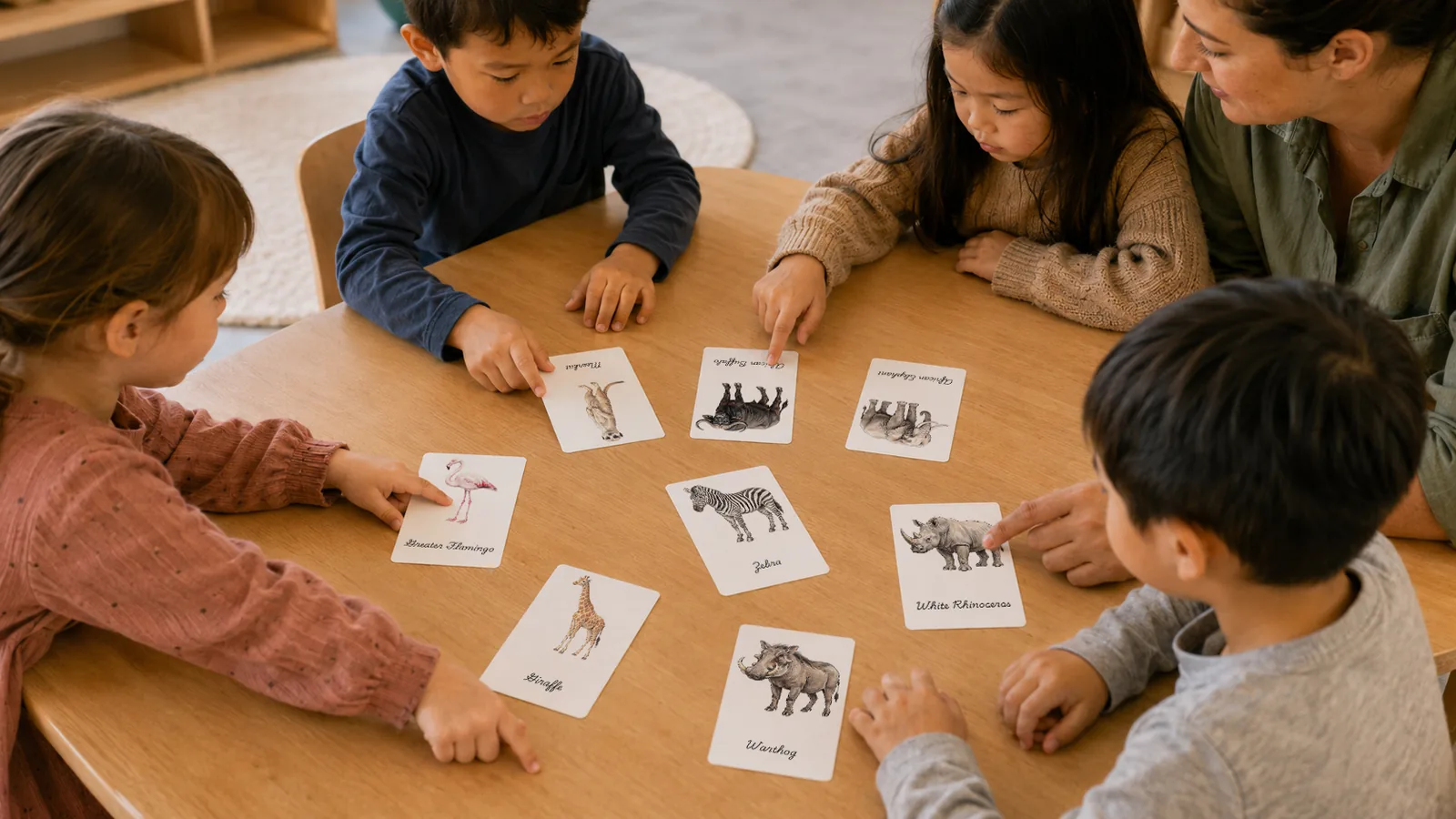
Flashcards for Quick Recall and Confident Naming
Flashcards are built for one job: helping a child recall a name quickly and confidently. Here is where they fit, where they don't, and how to use them well.
Read Article →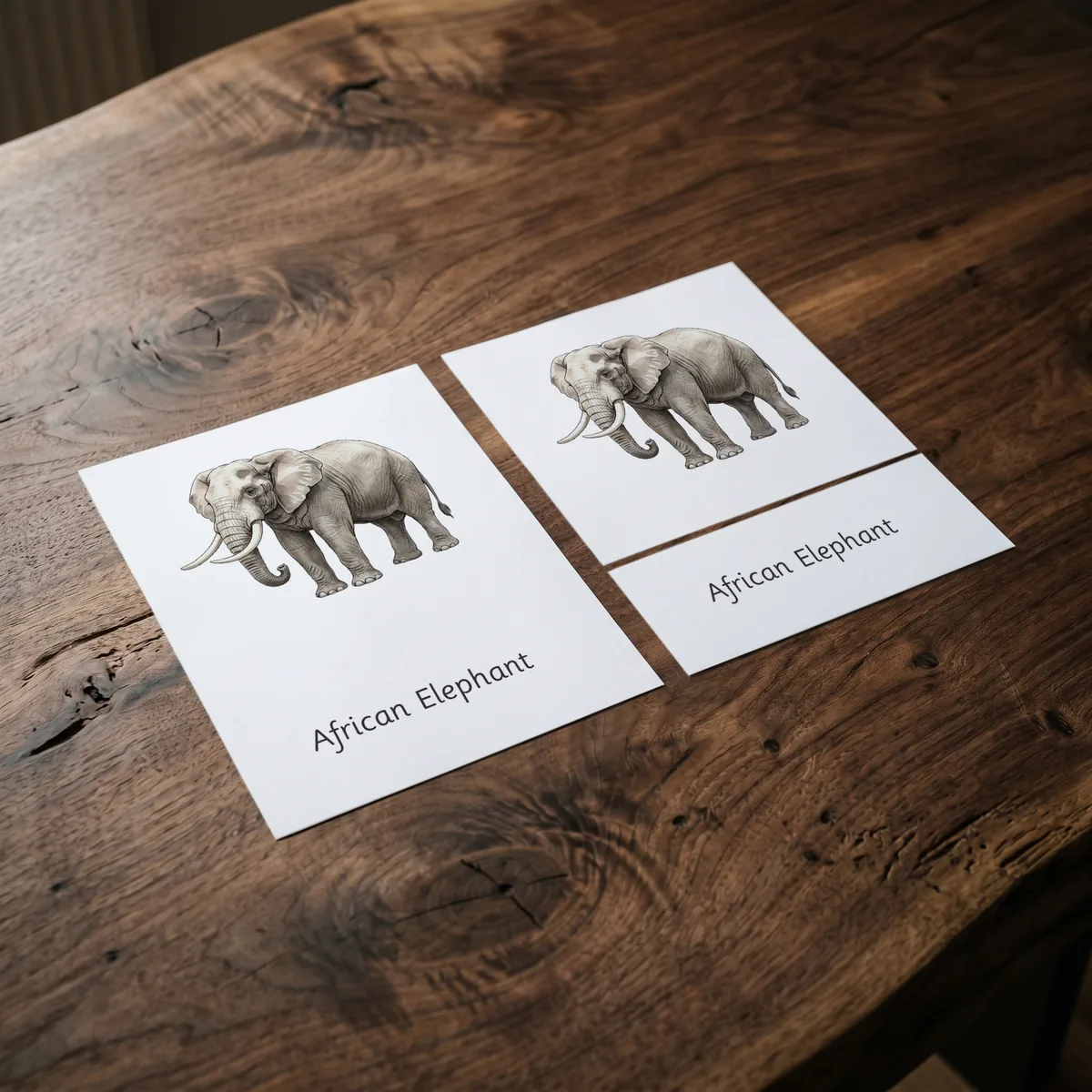 JUN 251 min read
Three Part Cards for Calm, Independent Learning
Three part cards are simple learning cards with three parts — a picture card, a word card and a control card — that help children connect real objects, spoken language and written words.
Read Article → JAN 131 min read
Why We Avoid Overstimulation
When too much is visible at once, attention is spent deciding what to look at. A calm environment makes it easier to engage deeply.
Read Article →