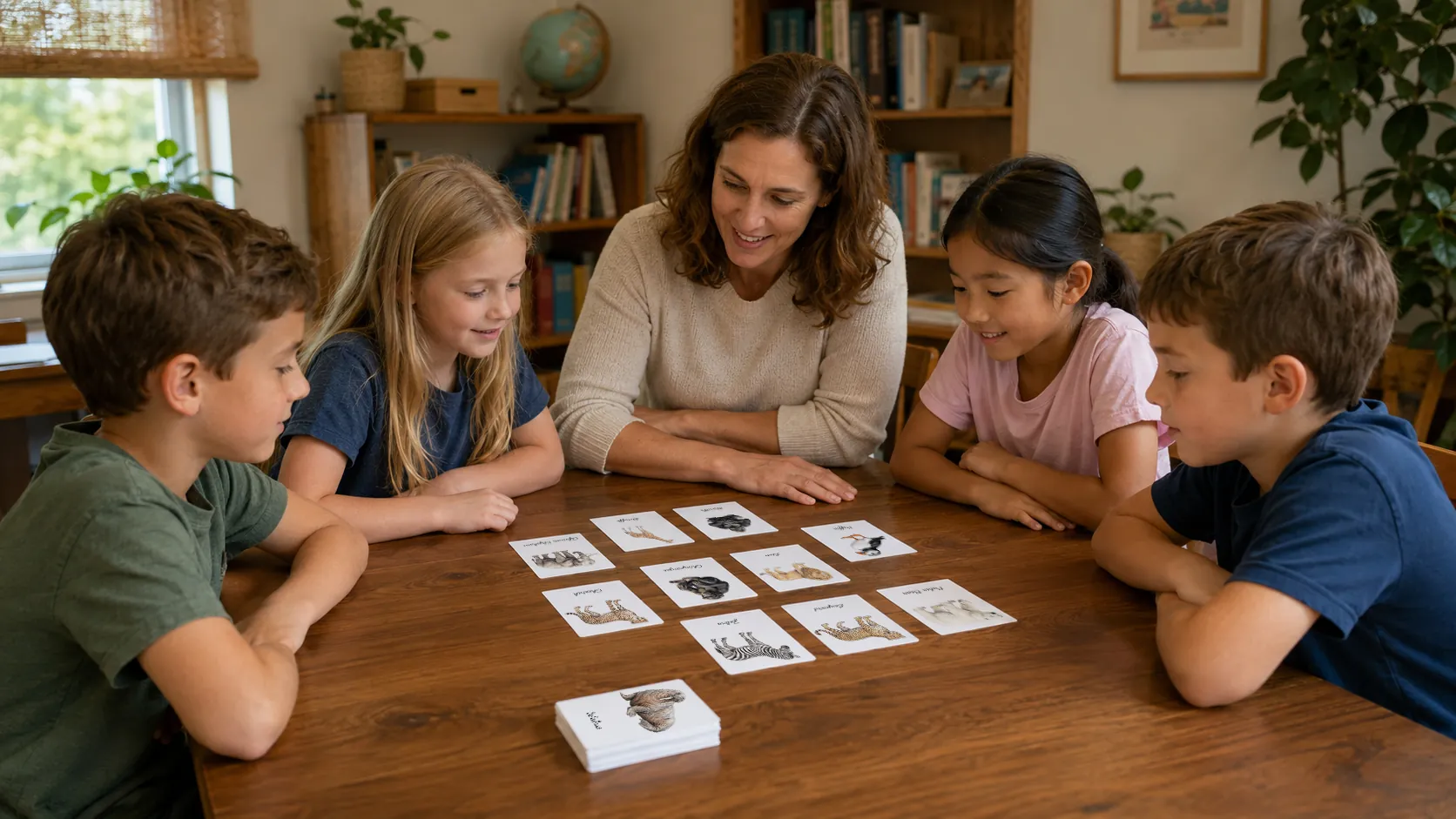
Cards in action.One real lesson.
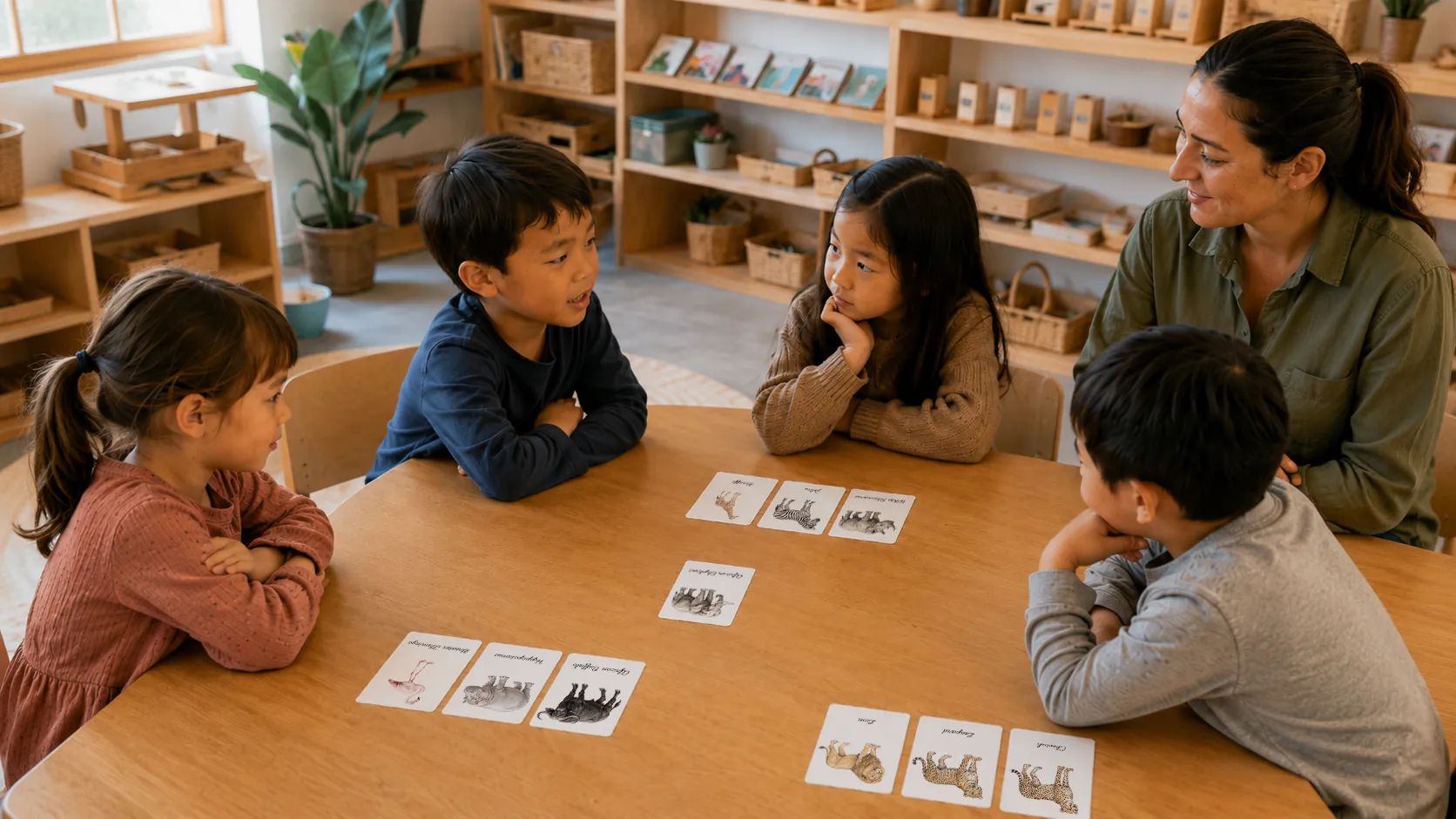
Four children, one teacher and a simple set of cards. Follow the lesson from first observations to shared ideas and independent exploration.
The cards don't teach the lesson.
They help the lesson take shape.
A small set of cards gives children something concrete to observe, compare and talk about. The teacher introduces the material, then follows the questions, ideas and connections that begin to emerge.
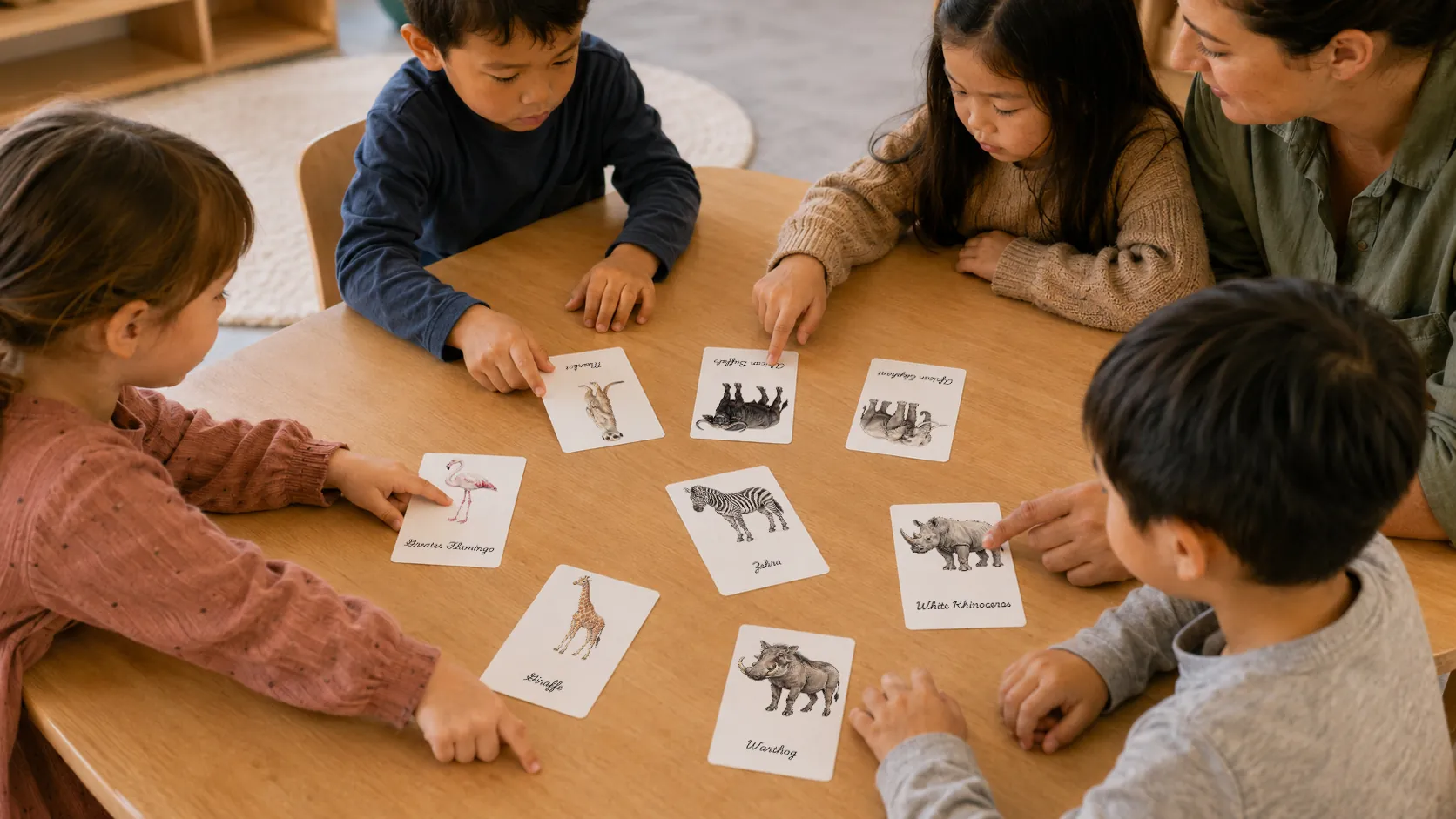 First look · open observation
Begin with what
children notice.
The teacher places a small selection of cards on the table without explaining what to do with them.
The children look closely, name what they recognise and begin to share their first observations. There is no correct answer yet. The lesson starts with attention, curiosity and what is already there.
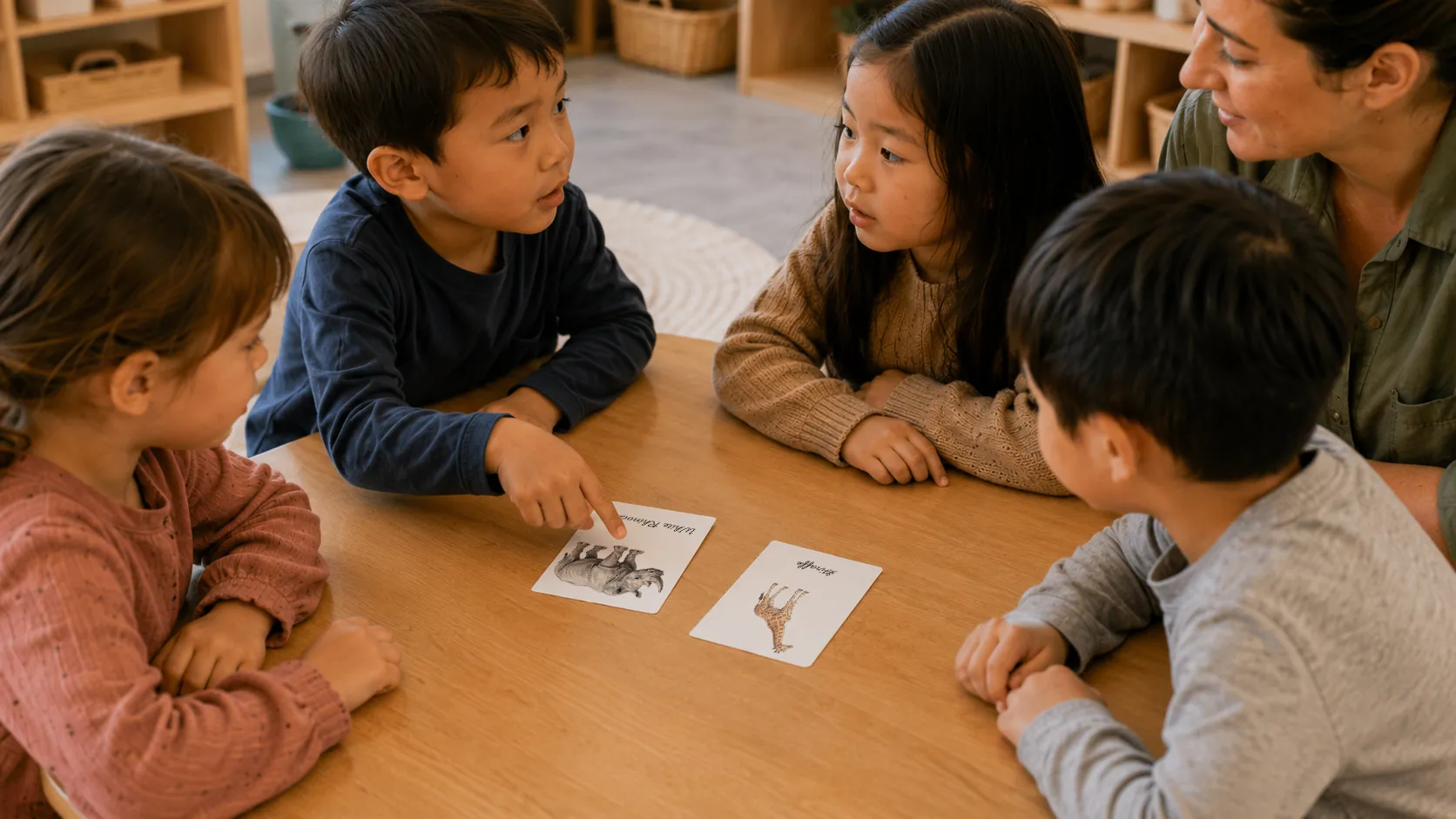 Shared attention · growing language
One card becomes
a shared idea.
The children begin to describe what they see, compare details and add what they already know.
The cards give everyone the same starting point, but not the same thought. One observation leads to another, new words appear and the lesson begins to move beyond the material itself.
One lesson, four steps.
The thinking changes.
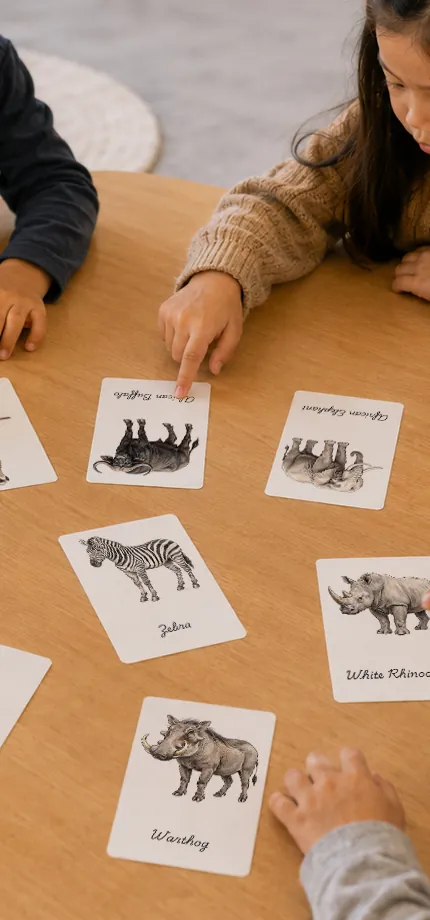
Notice first
Children take time to look closely before naming, sorting or explaining.
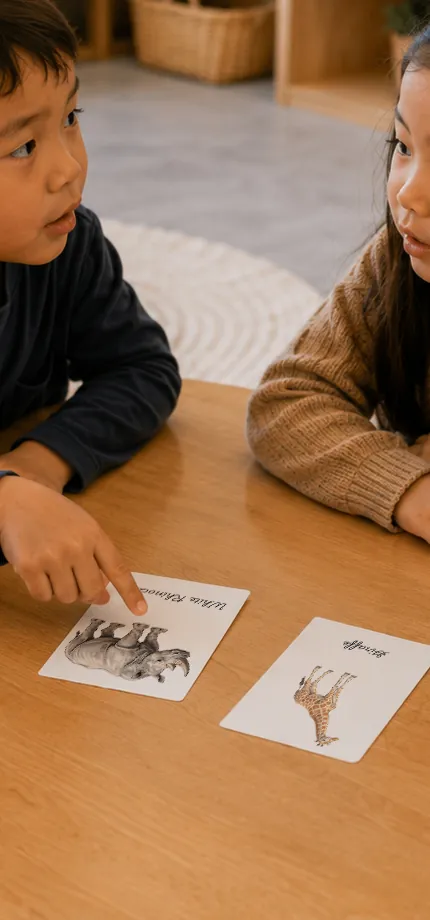
Find what connects
Two cards are placed side by side. Children notice similarities, differences and unexpected details.
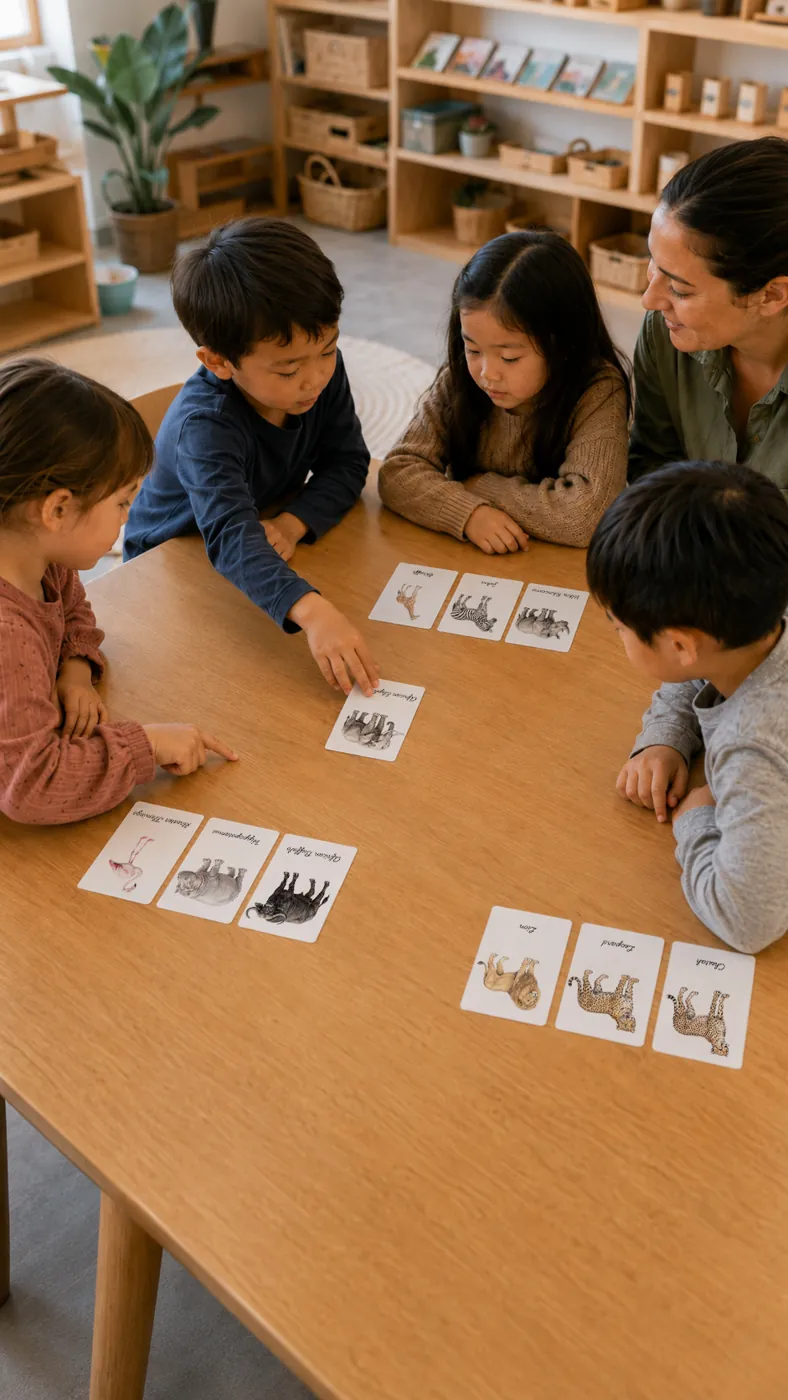
Test an idea
The cards are grouped by a rule the children choose. When the rule no longer works, the cards move again.
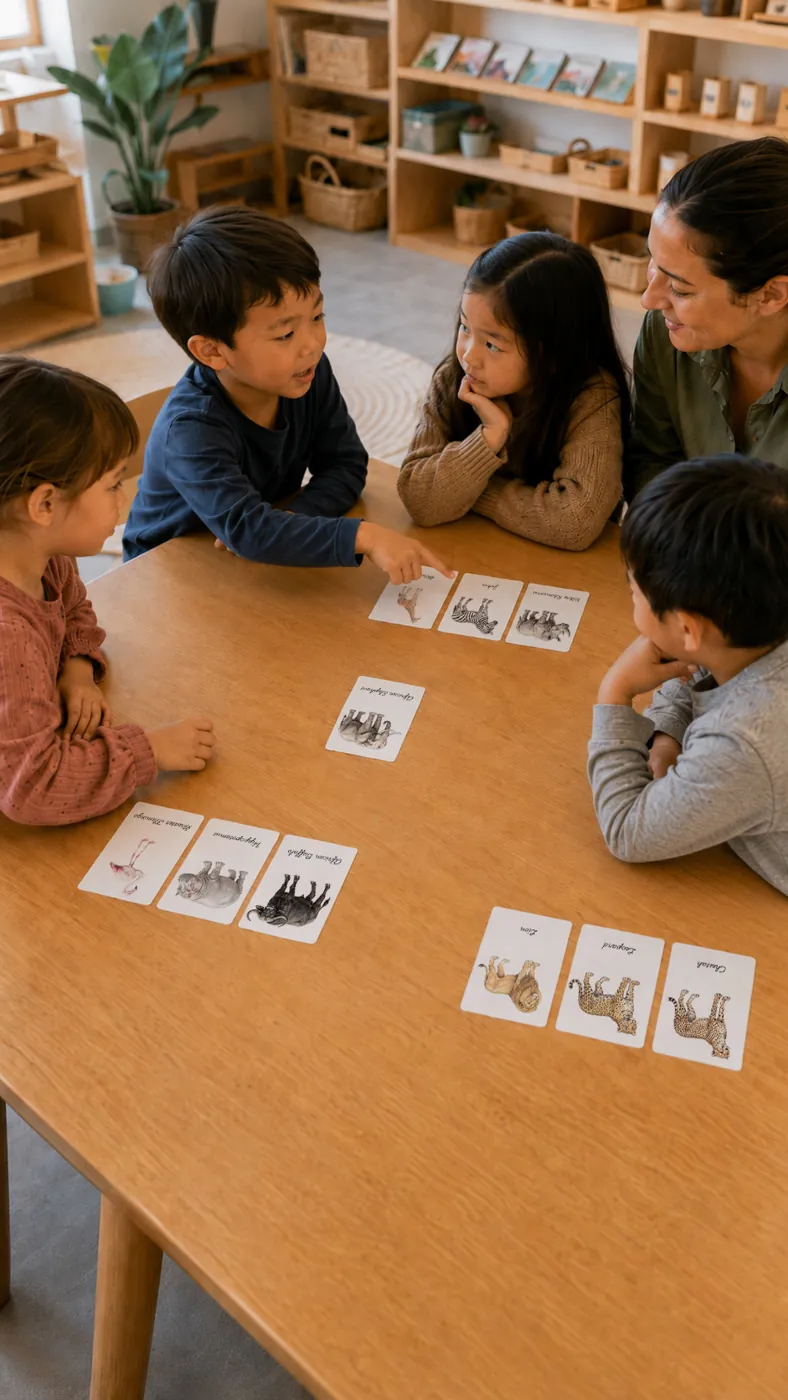
Share the reason
Children explain where a card belongs, listen to another view and reconsider their choice.
Shop the lesson.

Flashcards – African Animals
Flashcards for fifteen African animals — each shown as a clean illustration with its name — at the new 4×6 in / 10×15 cm

Flashcards – African Baby Animals
Flashcards for fifteen African baby animals — a lion cub, elephant calf, cheetah cub and more — each with its name, at 4

Flashcards – African Animals (Nature Scene)
Nature-scene flashcards for fifteen African animals, each pictured within its natural habitat and labelled with its name
The cards stay.
The thinking moves on.
Bring the cards into your classroom.
Explore the card sets used in this lesson and find the materials that fit your group, your topic and your way of teaching.